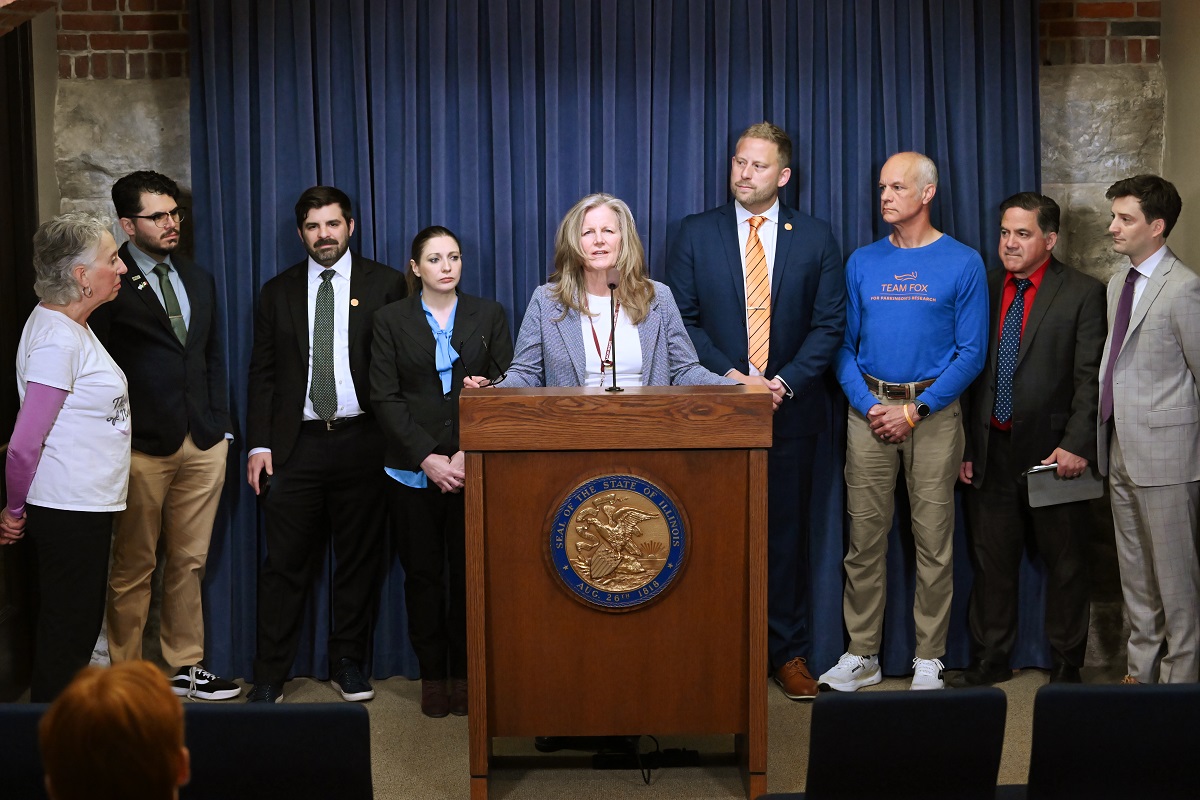
 SPRINGFIELD – State Senator Laura Ellman is advocating for new legislation aimed at banning the use of the toxic herbicide paraquat in Illinois, citing growing evidence linking the chemical to Parkinson’s disease and its mounting impact on families across the state.
“Paraquat is one of the most toxic herbicides still in use, and the science linking it to serious health risks like Parkinson’s disease is too strong to ignore,” said Ellman (D-Naperville). “Illinois has a responsibility to protect workers, families and communities by taking a closer look at its dangers and moving toward safer alternatives.”
Senate Bill 3161 would prohibit the use of paraquat beginning next year, with limited exceptions for research conducted under strict protocols established by the Illinois Department of Agriculture.
More than 41,000 Illinois residents are currently living with Parkinson’s disease, contributing to an estimated $3 billion in annual costs statewide according to the Michael J. Fox Foundation for Parkinson’s Research.
Paraquat, primarily used in agricultural settings, was first registered in the country in 1964 and later restricted due to its acute toxicity. Numerous studies have found that repeated occupational exposure to the chemical significantly increases the risk of developing Parkinson’s disease. The substance is so strongly associated with neurological damage that it is commonly used in laboratory settings to replicate Parkinson’s-like symptoms for research purposes.
Despite these risks, paraquat remains in use nationwide, even as more than 70 countries, including China, Brazil and members of the European Union, have banned it.
Supporters of the measure note that effective alternatives to paraquat already exist, including other herbicides and non-chemical weed management practices such as mechanical removal and integrated grazing. Research from countries that have enacted bans indicates agricultural productivity can be maintained without relying on the chemical.
Senate Bill 3161 was heard in a subject matter hearing in the Senate Agriculture committee on Thursday and awaits further consideration.